

Table of Contents
- Why SEL Matters in Today’s Schools
- The Five Core Competencies of SEL
- SEL in Real-Life Classrooms
- Recent Research Findings on SEL
- What Teachers Say About SEL
- Noticing Student Growth Through SEL
- Addressing Common Challenges in SEL Implementation
- Conclusion
Why SEL Matters in Today’s Schools
Today’s educational landscape is rapidly evolving, with increasing demands for academic achievement, multicultural awareness, and real-world readiness. In this context, social-emotional learning (SEL) has emerged as a foundational pillar for student success. Integrating SEL into the classroom nurtures skills like empathy, resilience, and healthy communication key ingredients for both academic and life-long achievement. Teachers and administrators alike are recognizing that the benefits of social emotional learning reach far beyond a child’s years in school, equipping them to navigate challenges and thrive in a complex world. By equipping students with skills in self-awareness, emotional regulation, and relationship building, SEL supports not only academic growth but also emotional and social well-being. Schools that embed SEL in their day-to-day culture see improvements in test scores, classroom atmosphere, and student engagement. These changes help create supportive and resilient school communities, making SEL a priority for educators and parents nationwide.
The Five Core Competencies of SEL
- Self-awareness: Recognizing one’s emotions, values, and strengths.
- Self-management: Effectively managing emotions, thoughts, and behaviors.
- Social awareness: Demonstrating empathy and understanding for others from diverse backgrounds.
- Relationship skills: Maintaining healthy relationships, cooperation, and conflict resolution.
- Responsible decision-making: Making ethical, constructive choices regarding personal and social behavior.
These five competencies, as defined by organizations like the Collaborative for Academic, Social, and Emotional Learning (CASEL), serve as the foundation for effective SEL programming. Each competency encourages students to develop tools that help them handle challenges inside and outside the classroom, building character and skills with lasting impact.
SEL in Real-Life Classrooms
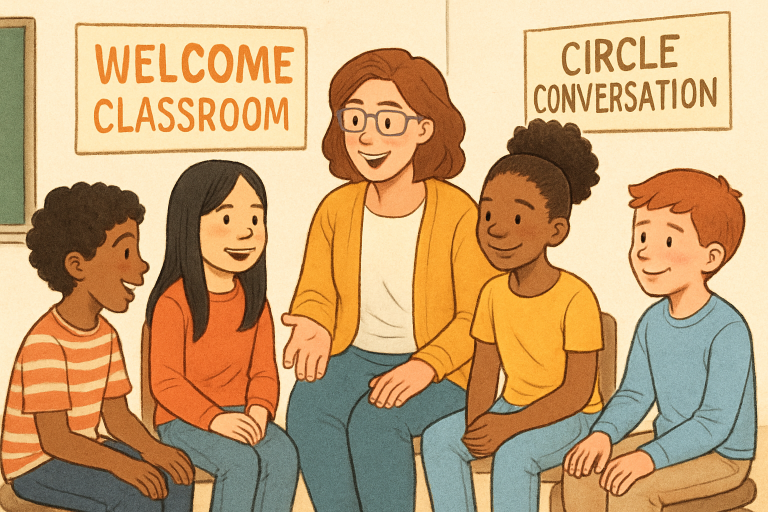
In practice, SEL is most powerful when embedded in everyday routines and lessons. Across the country, teachers incorporate SEL through activities such as morning meetings, journaling, and collaborative group projects. Role-playing gives students the chance to solve conflicts and learn empathy, while mindfulness exercises help them center themselves and manage stress. Community circles, peer mentoring, and gratitude journals are also popular strategies that encourage a sense of belonging and mutual respect. While approaches can vary, the goal remains the same: create classrooms where students feel safe, understood, and capable of expressing themselves. Educators find that even small changes, like greeting every student by name or setting aside time for students to share successes and challenges, can foster inclusion and respect.
Recent Research Findings on SEL
Multiple large-scale studies have confirmed the link between SEL and positive educational outcomes. A comprehensive review by the American Psychological Association found that students who participate in SEL programs show significant improvements in academic performance, classroom behavior, and attitudes toward school. Notably, these students also experience fewer disciplinary incidents and have lower rates of anxiety and depression. Researchers emphasize that SEL’s benefits are sustained over time. Students exposed to SEL are better prepared to form meaningful relationships, overcome challenges, and adapt to future demands—skills essential in an unpredictable, rapidly changing society.
What Teachers Say About SEL
Teachers, often on the front lines of SEL implementation, overwhelmingly report positive changes in school climate and student engagement. Many educators note a visible increase in empathy and teamwork, leading to stronger bonds within the classroom. Teachers see reduced bullying and a decrease in disruptive behaviors, which allows them to focus more on instruction and less on discipline. By creating an environment in which students feel heard and validated, teachers foster a sense of safety and self-confidence. This empowerment often translates into increased academic risk-taking and a willingness to collaborate, which fuels both personal and academic growth.
Noticing Student Growth Through SEL
The impact of SEL can be seen in both big transformations and subtle shifts. Parents and teachers might notice a student helping a classmate through a tough moment or using words to articulate frustration rather than acting out. Over time, students become more resilient—they persevere when faced with challenges, cope with disappointment, and learn to manage conflict constructively. These skills extend far beyond the classroom, supporting healthy relationships at home, in extracurricular activities, and eventually in the workplace. SEL helps students build self-awareness and empathy, which are traits valued in every sphere of life.
Addressing Common Challenges in SEL Implementation
Integrating SEL into established school routines is not without hurdles. Common challenges include limited instructional time, insufficient funding, or a lack of professional development opportunities. Sometimes, educators or families may not initially understand how SEL connects to academic achievement, leading to resistance. Schools that succeed in overcoming these obstacles often start with small, manageable changes. Providing accessible SEL resources, investing in ongoing teacher training, and involving families can build momentum and buy-in. It’s also crucial for school leaders to model SEL values and ensure collaboration among all staff members, creating a united approach to fostering a supportive school culture.
Conclusion
Social-emotional learning is more than just an educational trend it is a robust framework that prepares students for success in school and life. SEL equips young people with the skills they need to thrive in today’s complex world by cultivating self-awareness, resilience, empathy, and collaboration. Research, classroom experiences, and teacher insights all point to the same outcome: when SEL is prioritized, students are more engaged, schools are more supportive, and communities are stronger. While challenges in implementation exist, small and intentional steps can make a lasting difference. With continued commitment from educators, families, and policymakers, SEL has the potential to transform not only classrooms but the broader future of education.
