
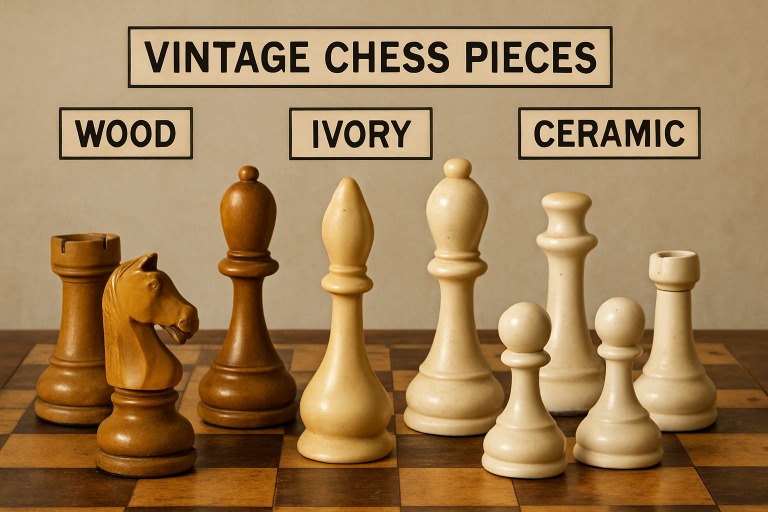

Key Takeaways
- Vintage chess sets are more than just game pieces; they are historical artifacts that reflect the art and culture of their time.
- The Staunton design, introduced in 1849, revolutionized the aesthetics of chess sets and remains the standard today.
- Collecting vintage chess sets offers both aesthetic pleasure and potential investment value.
Chess, a timeless contest of skills and intellect, has transcended mere competition to become a reflection of global art and heritage. The nuanced design and meticulous craftsmanship of vintage chess sets speak to much more than gameplay; they serve as valuable testaments to cultural narratives from various epochs. Whether it’s the tactile feel of carved wood or the story-rich motifs etched into a set, enthusiasts recognize how each vintage set provides a bridge to the artistry and lifestyles of bygone eras. For those fascinated by the intersection of art and history, exploring collections like the Wedgwood Chess Sets reveals just how deeply embedded chess is in our cultural memory.
The legacy built into every vintage chess set is more than decorative—a single set can encapsulate centuries of tradition and the meticulous craftsmanship of skilled artisans. For collectors and admirers, these objects serve as a window into the ancient world of chess, showcasing materials and styles that are specific to their geographic and historical origins. This makes the study and acquisition of vintage sets an ongoing adventure of discovery and appreciation.
As the chessboard has traveled from palaces to parlors, vintage sets have marked milestones in both social status and technological advancement. Their evolution parallels shifts in society and taste: from minimalist forms conceived out of religious necessity, to opulent designs that adorned the tables of monarchs and nobility. Historic chess sets not only reveal how the game was played, but also how it was perceived—both as a pastime and a symbol of prestige.
The deeper one delves into the world of vintage chess sets, the more apparent it becomes that these are not simply relics. Instead, they are vibrant artifacts, cherished for their beauty, meaning, and connection to the rich tapestry of human culture. Chess remains both a UNESCO-recognized treasure and a living game, affirming the enduring legacy of its most prized sets.
The Evolution of Chess Set Design
At its origins, chess evolved in various cultures, giving rise to diverse designs that reflect the religious, societal, and artistic norms of each. In early Islamic societies, where figurative art was discouraged, chess pieces took on geometric shapes, prioritizing function and subtlety over ornamentation. This abstract approach ensured the game could flourish within the bounds of religious doctrine and demonstrated the adaptability of chess to its environment.
As chess migrated to medieval Europe, artisans and craftsmen began to embellish sets with increasingly elaborate details. The Renaissance era ushered in a new wave of decorative luxury, as carvings became increasingly intricate, often depicting royalty and military icons in ivory, ebony, and gold. Chess sets from this period reveal an enthusiasm for display and luxury, turning each board into a canvas for intricate artistic statements.
The Staunton Standard
The introduction of the Staunton chess set in 1849 marked a pivotal moment in the history of chess. Designed for clarity and standardized play, the Staunton pieces quickly gained international acceptance, setting a benchmark for modern chess. Named after Howard Staunton, the strongest English chess player of the time, its form features graceful yet easily distinguishable shapes. The Staunton design remains the cornerstone of official tournaments and is universally admired for its balance of beauty and utility.
Artistic Interpretations
Some chess sets transcend mere function, becoming ambitious artistic ventures. The Bauhaus-inspired set by Josef Hartwig in 1924 exemplifies this trend—transforming pieces into pure geometric forms and distilling chess to its strategic core. Similarly, mid-century and avant-garde artists have experimented with materials such as glass, ceramics, and metal, challenging collectors’ expectations and pushing the boundaries of traditional design. These artistic interpretations reinforce the notion that chess, as a game and object, is perennially open to reinvention.
Collecting Vintage Chess Sets
For many collectors, each vintage chess set is a piece of living history, valued for both its narrative and intrinsic qualities. Notable items, such as the twelfth-century Isle of Lewis chessmen carved from walrus ivory and unearthed in Scotland—stand alongside ornate Soviet-era porcelain sets that reflect the political undertones of their era. The allure of collecting arises not only from their decorative charm but also from the potential for long-term investment, especially as rare and historically significant sets gain recognition at auctions and international exhibitions.
Preserving Cultural Heritage
Museums and cultural institutions take a proactive role in safeguarding the legacy of vintage chess sets. The World Chess Hall of Fame and similar venues curate exhibitions that highlight the artistry and global narrative of chess, engaging audiences with the game’s development across centuries. These collections provide educational insights and foster a deeper appreciation for how chess has mirrored, and even influenced, societal change.
Conclusion
Vintage chess sets are far more than tools for play; they are treasures steeped in art, heritage, and the progression of civilization. From the understated elegance of early geometric designs to the enduring popularity of the Staunton set and the imaginative innovations of contemporary artists, these sets inspire collectors and enthusiasts worldwide. They serve as both a tribute to human ingenuity and a tangible connection to our shared past.
