
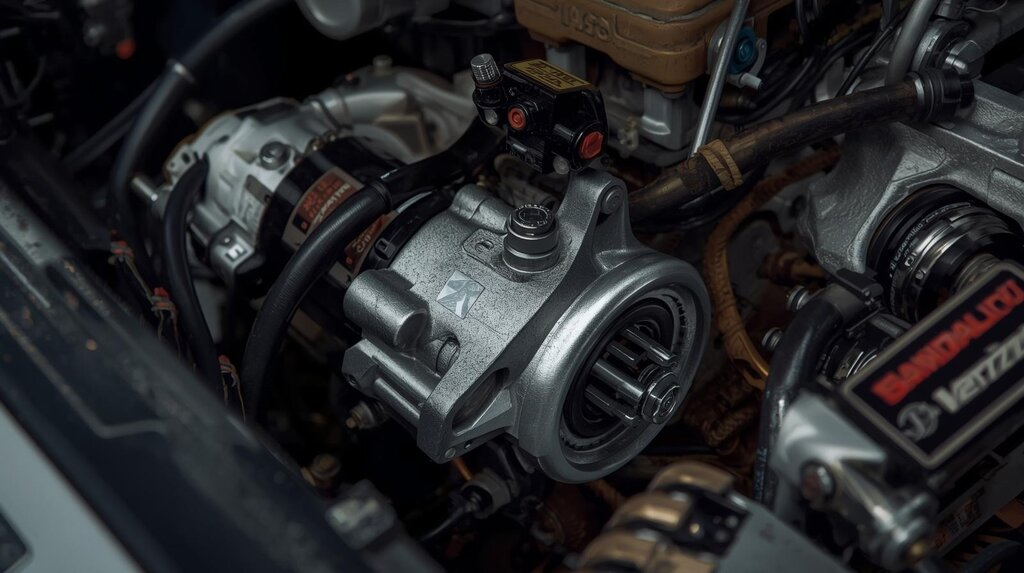

There are some reasons if you can’t start your machine; one is that the starter motor is failing. But you don’t need to replace it every time. This guide will tell you 3 steps to test a heavy-equipment starter system. Follow this guide, and it can help you diagnose the faults accurately. As a result, you can avoid costly downtime and get your machine back to its optimal condition.
Safety First
The power systems on heavy-duty vehicles deliver hundreds of amps at 12, 24, or even 32 volts, enough to cause burns or severe injury if handled carelessly.
Always follow these steps before beginning any diagnosis:
- Park on stable ground.
- Engage the parking brake.
- Lower all implements.
- Lockout/Tagout (LOTO).
- Disconnect the batteries.
- Wear proper PPE.
Electric current isn’t visible — treat every terminal as live until proven otherwise.
The Tools You’ll Need
You don’t need a diagnostic computer, just solid fundamentals and a few dependable tools:
- Digital Multimeter (DMM): The main instrument for measuring voltage and continuity.
- Basic hand tools: Wrenches or sockets to reach terminals and mounting points.
- Wire brush & contact cleaner: For cleaning oxidized or dirty connections.
- Heavy‑gauge jumper wires: To bypass sections of the circuit during testing.
- Remote starter switch (optional): Allows safe solenoid activation from outside the cab.
Quality tools are non‑negotiable in the field; poor leads or cheap meters can mislead your diagnostics.
How to Diagnose a Bad Starter? 3 Steps to Tell
With these 3 easy steps diagnostic guide, you can tell if a starter is bad easily. Please replace the starter immediately when necessary.
Step 1: Visual & Voltage Checks
More than half of “bad starter” reports are traced to power‑supply or connection issues.
A. Battery Condition
Heavy‑equipment starters consume enormous current (often 800–1500 A).
A healthy 12 V battery should read 12.6 V+ at rest; a 24 V system should show 25.2 V+.
Static Voltage Test: < 12.2 V (or 24.4 V) = about 50 % charge — often too low to crank a diesel.
Load Test:
- Use a carbon‑pile tester.
- Voltage under load should stay above 9.6 V (12 V systems) or 19.2 V (24 V).
- Lower readings = weak battery (primary suspect).
B. Connection & Ground Inspection
Job‑site vibration, moisture, and dust destroy electrical integrity.
- Battery terminals: Remove, clean to shiny metal, reinstall tightly.
- Starter terminals: Inspect both the power post and small signal wire (S‑terminal) for looseness or corrosion.
- Ground paths: Follow the negative cable to the frame and engine — clean and retighten.
Check the engine‑to‑frame ground strap; a loose or corroded ground is a silent killer.
Step 2: Check the Control Circuit
Once you know the batteries and cables are sound, confirm that the start signal reaches the solenoid.
- Reconnect the batteries just for testing; ensure the machine is in neutral with the brake set.
- Locate the ‘S’ terminal on the solenoid.
- Place your multimeter’s black probe on a clean chassis ground and the red on the ‘S’ terminal.
- Turn the ignition key to START.
Results:
- Battery voltage present: Signal wiring & ignition switch are likely good → fault lies inside the starter assembly.
- No voltage: Problem exists upstream — check the ignition switch, safety interlock, or harness.
Step 3: Test the Starter Assembly
If batteries, cables, and control circuits check out, focus on the starter itself.
A. Voltage Drop Test
Reveal hidden resistance in cables or solenoid contacts.
- Set DMM to low‑range DC volts.
- Place red lead on battery (+) post, black on solenoid input post.
- Crank the engine.
- Reading < 0.5 V: Normal.
- Above 0.5 V: Excessive resistance in the positive cable or solenoid.
- Reading < 0.5 V: Normal.
- Repeat on the ground side: red on starter housing, black on battery (–). Again, the drop should be < 0.5 V.
B. The Controlled “Bypass” or “Bump” Test
This isolates the starter from all machine wiring.
Extreme caution: Ensure neutral gear, clear the area, and secure implements.
Method 1 – Remote Starter Switch
- Connect switch leads between the solenoid’s main power post and the S terminal.
- Press the switch.
Method 2 – Jumper Wire
- Briefly bridge the same two terminals with an insulated screwdriver or heavy jumper.
Expect a small spark.
Interpret the results:
| Observation | Meaning |
| Loud click + engine cranks | Starter OK → control circuit fault. |
| Click , but no crank | Bad armature / brushes / stuck motor → starter rebuild or replacement. |
| No click, no crank | Dead solenoid → replace starter assembly. |
| Motor spins , but the engine doesn’t | Damaged drive/Bendix → replace or rebuild. |
When and Why Starters Fail in Off‑Road Equipment?
- Dust and grit in the solenoid plunger (common in quarry or mining sites).
- Loose belly pans or missing guards are allowing mud buildup on terminals.
- Voltage spikes from jump‑starting large machines with mismatched systems (12 V ↔ 24 V).
- Prolonged cranking during cold starts burns the commutator.
Regular cleaning and voltage‑drop testing during service intervals prevent 80 % of premature starter failures.
Conclusion
A starter replacement for a mid‑size excavator can cost thousands — not counting downtime.
By applying a disciplined diagnostic process — from battery and ground checks to voltage testing and direct bypassing — operators can identify the true cause of a no‑crank condition and avoid unnecessary repairs.
In the off‑road world, knowledge saves revenue. Before ordering another heavy‑starter assembly, invest twenty minutes in solid diagnostics.
