
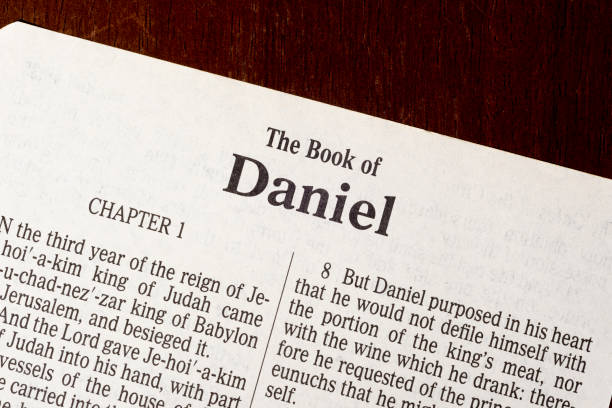

Context for Daniel’s Seventy-Weeks Framework
The stage was set not in a vacuum but in the gritty reality of Persian-ruled Judea between 538 and 445 B.C. Exiles had trickled back home, bringing memories of a burned city and broken walls. The imperial decree to rebuild Jerusalem was more than a civic project—it was tinder for Daniel’s extraordinary vision. Stone by stone, the restoration was less about aesthetics and more about reclaiming identity under foreign oversight. The geopolitical winds were unstable. Rivals circled, tensions simmered, and the city’s reconstruction became a flashpoint in the spiritual and political imagination. Within this fraught environment, Daniel’s seventy-weeks framework surfaced, intertwining calendar and destiny in a way that refused to leave history untouched.
Understanding the Seventy-Weeks Structure
The text’s “weeks” (Hebrew shabu‘im) are not seven-day stretches but seven-year spans, the kind that compress generations into measurable blocks. This structure slices sacred history with precision, dividing events into segments that refuse arbitrary interpretation. Each segment builds toward a tension point. Ignore that interplay and you miss the weight of the vision entirely.
The First Seven Weeks
This opening period reads like the grit of Nehemiah’s memoirs—walls rising, gates hammered into place, civic life elbowing its way back into relevance. It’s less about architectural triumph than about forging a community from scattered remnants, a people determined to function under Persian administration yet stubbornly distinct.
The Following Sixty-Two Weeks
From the close of reconstruction to the arrival of the “anointed one,” the long middle stretch marks a season of waiting, pressure, and silent formation. This is the slow simmer of political churn, covenant testing, and the tightening coils of expectation. A figure rises at the appointed point, one whose presence upends the trajectory in ways no mere governor or priest could achieve.
The Final Week
The narrative fractures. A covenant splinters midway, sacrifices are halted, sacred rhythm collapses. This final span drips with eschatological signals—shadowy and sharp—where earthly chronology brushes against the edge of divine intervention.
Characters at the Heart of the Seventy-Weeks Prophecy
Three entities dominate the stage: the “anointed one” whose role slices into history like a chisel, the hostile “prince” whose actions defile the sacred order, and the “holy city” itself, both backdrop and protagonist. Echoes of these figures ripple through Daniel’s other visions and mingle with prophetic threads from Isaiah and Jeremiah. They are not flat archetypes but charged presences embodying covenant fidelity, betrayal, and enduring sanctity. Together, they form the human and symbolic counterpoint to the prophecy’s calculated sequence.
Diverse Readings of the Seventy-Weeks Prophecy
Interpretation fractures along distinct lines. The preterist places all seventy weeks neatly within ancient political upheavals, locking fulfillment in the distant past. The historicist stretches those weeks across sprawling centuries, aligning them with ecclesiastical power shifts and empire cycles. The futurist pushes the final week into an as-yet-unrealized climax, viewing the gap as deliberate and pregnant with unresolved tension. Each approach rewrites the calendar, but none escapes the prophecy’s disruptive precision.
Archaeology and Secular History Meet the Seventy-Weeks Prophecy
Spades and scrolls both speak. Persian-era administrative tablets verify the timelines of imperial decrees. Excavations around Jerusalem’s ancient footprint reveal rebuilding layers consistent with the biblical account, yet gaps remain, stubborn and unyielding. Chronological puzzles lurk in the margins of official records where dates and events refuse neat alignment. In the midst of that complexity, the framework of Daniel’s 70 Weeks prophecy remains a stubborn grid against which scholars measure shards, inscriptions, and faded ink, illuminating how fragile the handshake between text and artifact can be.
Bridging Ancient Timeline with Modern Reflection
The conversation hasn’t ended; it has mutated. Scholars deconstruct it in peer-reviewed journals. Novelists rethread its drama into allegories that bite. Filmmakers toy with its sequence as apocalyptic backdrop. The seventy-year cycles still challenge those who think history is merely a record of extinguished events. The tension between calculated sacred time and the chaos of lived experience refuses to dissolve.
When Daniel’s Seventy-Weeks Vision Still Speaks
Strip away the noise and the prophecy’s core stands: time is measured, contingent, and purposeful. Yet pieces remain elusive, taunting interpreters to push harder. The puzzles are not defects to patch, but invitations to lean in. Picture again that Persian-era Jerusalem, walls half built, hope and exhaustion entwined. The vision cast in that dust continues to pulse, asking not to be solved but to be reckoned with.
