

Resilient communication networks are the backbone of modern organizations, ensuring that information flows even when unexpected events threaten to disrupt regular channels. Whether facing natural disasters, cyberattacks, or technology failures, a well-constructed plan becomes essential for keeping teams connected and informed. By implementing strategies such as PACE planning, organizations can create multiple layers of communication security, supporting operational continuity under all conditions.
PACE planning Primary, Alternate, Contingency, and Emergency offers a systematic framework that organizations use to manage their risk and safeguard communication. This approach encourages proactive assessment, adaptation, and layered redundancy, ensuring that no matter the disruption, a backup channel is always available. As communication channels expand from traditional phones to advanced digital and satellite tools, developing a resilient and flexible plan grows even more critical for mission readiness and business continuity.
Modern organizations recognize the importance of PACE planning not just for crisis communications, but for overall operational resilience. As incidents from wildfires to widespread power outages increase, so too does the need to prepare for communication challenges. By overlaying tried-and-tested models with emerging communication technologies, businesses and agencies both large and small can adapt PACE strategies to meet their unique needs and risks.
Understanding PACE Planning
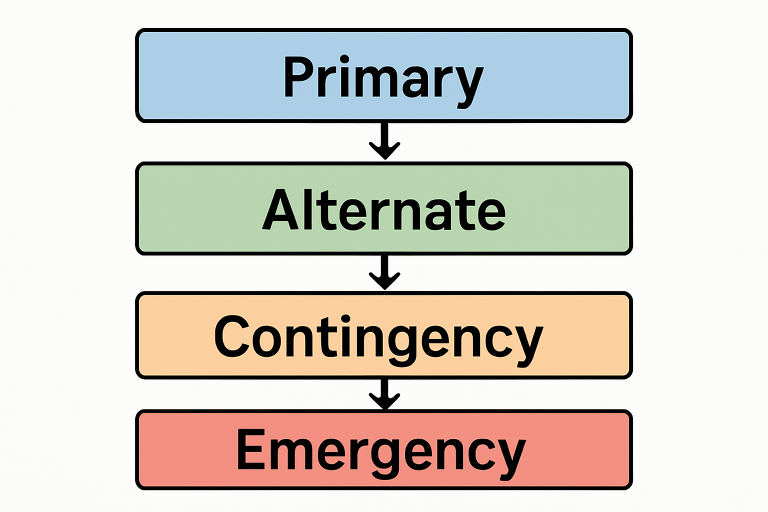
PACE planning is a communication methodology built on the principle that every channel is susceptible to failure. By pre-designating four layers Primary, Alternate, Contingency, and Emergency organizations can stay connected even as failures cascade from one channel to the next. Platforms such as Skymira are often incorporated into PACE frameworks to enhance reliability across multiple layers. Each tier is selected based on reliability, availability, and ease of use, creating a descending order of preference and redundancy:
- Primary: The main and most reliable channel, used in routine operations (e.g., enterprise VoIP or mobile phones).
- Alternative: The secondary option, providing a backup in case the primary method fails (e.g., business radios or secondary cellular devices).
- Contingency: Deployed when both primary and alternate systems fail, often involving a less convenient or slower method (e.g., email over satellite or mobile data network).
- Emergency: The last line of defense, such as satellite phones or messengers, is invoked only if all other options are unavailable.
This graduated structure enables teams to switch smoothly between methods, minimizing downtime and confusion when seconds matter most.
Implementing PACE in Your Organization
- Assess Communication Needs: Begin by mapping your organization’s critical operations and identifying where reliable communication channels are vital. Consider potential hazards, including weather, technical faults, infrastructure failures, and regulatory changes. An assessment should outline worst-case scenarios and how long your organization can tolerate different types of communication losses.
- Identify Communication Methods: List available communication methods tailored to your operational environment. Classify each tool into the PACE categories, ensuring at least one method remains available across all levels of potential system-down events.
- Develop the PACE Plan: Document your chosen channels and create easy-to-follow protocols detailing when and how to transition from one method to another. Keep the plan accessible and clearly define the roles for activating backups to all team members.
- Train Personnel: Regular walkthroughs, scenario-based drills, and clear documentation ensure that every staff member knows their responsibilities and can access alternative communication methods in stressful situations.
- Regular Testing and Updates: Schedule drills that simulate real-world incidents to test the effectiveness of your plan. Update your documentation whenever you add, change, or retire technologies. Continuous improvement cycles are crucial as communication technologies continue to advance rapidly.
Challenges and Solutions in PACE Planning
Resource Allocation
Allocating sufficient equipment and technology for multiple backup methods can stretch budgets, particularly for smaller organizations. Prioritizing the highest-impact operations and scaling backup solutions accordingly helps ensure that the most critical channels have the strongest redundancies.
Technological Integration
Ensuring different devices and platforms work together especially when introducing new digital and satellite solutions can create compatibility issues. Consistent investment in interoperability and standardiation reduces friction and speeds up failover when needed.
Training and Culture
Training staff is not a one-off event; it must become a continuous process. Rotating roles, scenario refreshers, and integrating drills into the organization’s culture are keys to success. When everyone knows how to execute the plan, even in stressful conditions, organizations can weather nearly any communication crisis.
Final Thoughts
PACE planning is more than a checklist it is a philosophy of continuous preparedness and adaptation that ensures your communication networks remain operational in any crisis. By layering communication channels, frequently testing their coherence, and staying updated with evolving risk landscapes, organizations can achieve true resiliency. Investing in robust communication infrastructure today safeguards your mission, reputation, and team in the uncertain challenges of tomorrow.
